4 min read

VoicePlug’s conversational AI now integrated with Qu to enable intuitive voice ordering across phones and drive-thrus.Palo Alto, CA…
Learn More
A few years ago, restaurant AI felt like something reserved for large chains with massive technology budgets.
Today, it’s becoming part of everyday restaurant operations.
From answering phone calls and managing reservations to improving drive-thru performance and personalizing guest experiences, artificial intelligence is helping restaurants operate more efficiently while delivering better customer service.
But not every AI investment delivers the same value.
The restaurants seeing the strongest results are focusing on technologies that directly impact revenue, improve guest satisfaction, and reduce operational friction.
The good news? You don’t need a team of data scientists or a multimillion-dollar technology budget to benefit from AI.
Here are eight practical ways restaurants are using AI today—and how you can apply them to your business.
Despite the growth of online ordering and delivery apps, the phone remains one of the most valuable ordering channels for many restaurants.
Customers still call to:
The challenge is that calls often arrive when employees are busiest serving guests.
That’s where restaurant AI can make an immediate impact.
AI Phone Ordering System can answer every incoming call, take complete orders, process modifications, answer common questions, and send tickets directly into your POS.
Instead of placing customers on hold—or worse, missing calls altogether—restaurants can provide instant service while allowing staff to focus on in-store operations.
For many operators, this is one of the fastest ways AI for restaurants can generate measurable ROI.
Internal Link: Voice AI Phone Ordering
Reservations remain one of the most common reasons guests contact restaurants.
Yet many restaurants still rely on employees to answer reservation calls throughout the day.
Modern AI Restaurant Reservation System can automate much of this process.
Guests can:
without requiring staff involvement.
This creates a better experience for guests while reducing administrative work for restaurant teams.
As reservation volumes grow, many operators are turning to reservation AI solutions to ensure guests receive immediate responses regardless of time of day.
For restaurants that rely heavily on bookings, AI for restaurant reservations can significantly improve efficiency while helping maximize table utilization.
Drive-thru speed has become one of the most important competitive advantages for quick-service restaurants.
Long wait times impact guest satisfaction, throughput, and revenue.
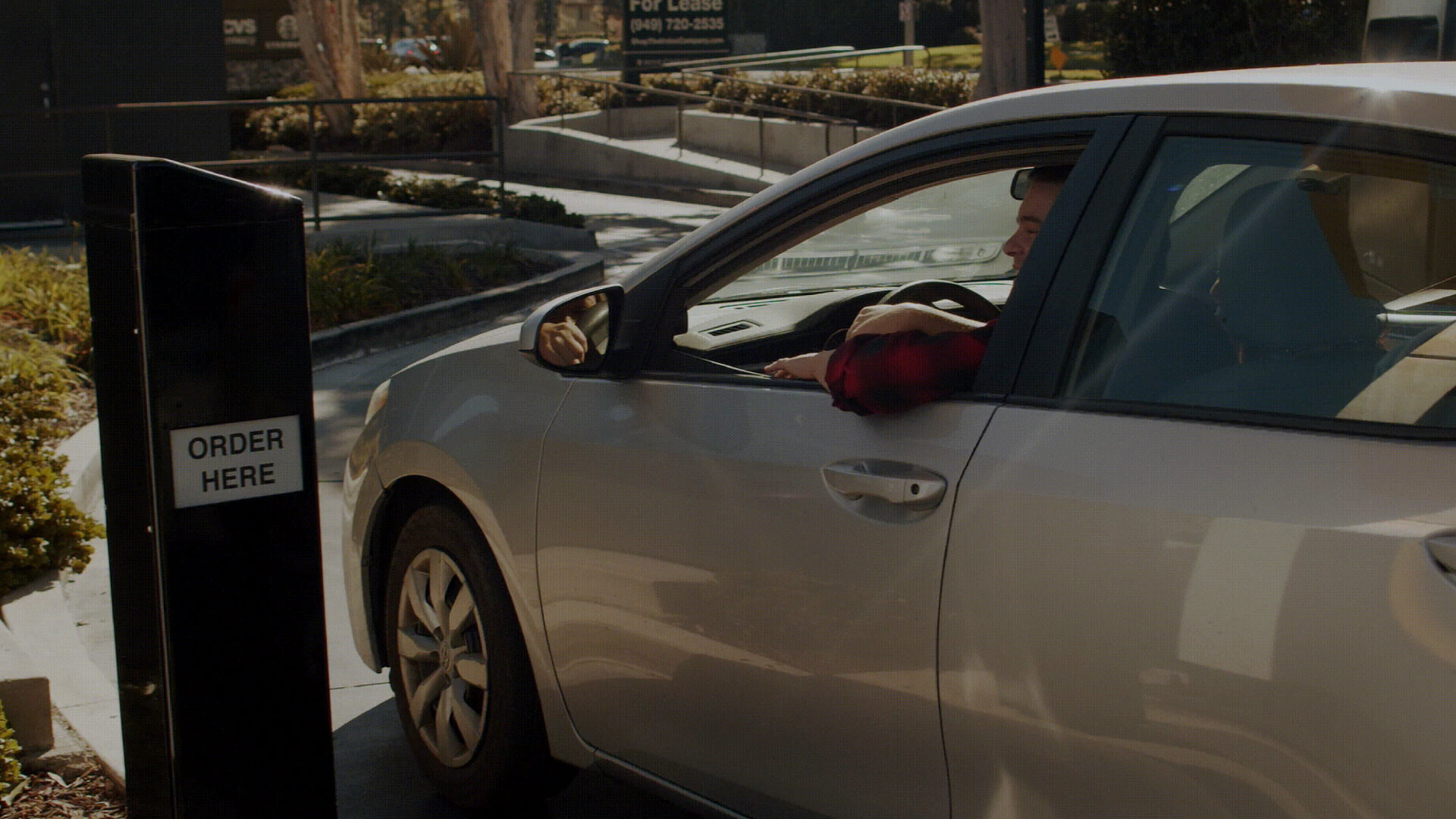
Many AI restaurants are now using conversational AI to help streamline drive-thru operations.
These systems can:
The objective isn’t to replace employees.
It’s to create a smoother ordering experience that allows restaurants to serve more customers during peak periods.
As labor challenges continue across the industry, AI Drive Thru is becoming one of the fastest-growing applications of restaurant artificial intelligence.
Restaurants receive hundreds of repetitive customer questions every month.
Common inquiries include:
While each question seems small, collectively they consume valuable staff time.
AI-powered guest engagement tools can answer these questions instantly through phone, text, chat, or digital channels.
This ensures guests get immediate responses while reducing interruptions for restaurant employees.
The result is better customer service and more efficient operations.
Personalization is becoming one of the most valuable applications of AI in restaurants.
Today’s customers expect businesses to remember their preferences and provide relevant recommendations.
Restaurant AI can help operators:
When guests feel recognized, they’re more likely to return.
This is one reason AI for restaurants is increasingly being viewed as a customer experience investment rather than simply an operational tool.
Order mistakes are expensive.
Incorrect orders lead to refunds, remakes, negative reviews, and lost customer trust.
As menus become more customizable, maintaining accuracy becomes increasingly challenging.
AI ordering systems help improve consistency by accurately capturing customer requests and routing them directly into restaurant workflows.
Whether it’s a phone order, drive-thru order, or reservation request, automation reduces the risk of human error while creating a more reliable experience for guests.
For high volume restaurants, even small improvements in accuracy can have a significant impact on profitability.
Upselling has always been one of the simplest ways to increase revenue.
The problem is consistency.
Some employees excel at suggesting add-ons, while others rarely do.
AI helps standardize this process.
Modern ordering systems can recommend:
Because recommendations are delivered consistently, restaurants often see stronger attachment rates and higher average order values.
The best AI systems make these suggestions feel natural and helpful rather than scripted.
When done correctly, customers receive a better experience while restaurants generate more revenue.
The most successful restaurants don’t use AI as a standalone tool.
They connect it across the entire operation.
Modern restaurant artificial intelligence platforms can integrate with:
This creates a more connected operation where information flows automatically between systems.
Instead of managing multiple disconnected tools, operators gain a unified view of performance and customer interactions.
This is where restaurant AI delivers some of its greatest long-term value.
Restaurants aren’t adopting AI because it’s trendy.
They’re adopting it because guest expectations have changed.
Customers expect:
Restaurants that fail to meet these expectations risk losing customers to competitors that do.
Artificial intelligence helps operators deliver these experiences consistently, even during peak periods.
That’s why AI is quickly moving from a competitive advantage to an operational necessity.
Many AI platforms are designed for general business use.
VoicePlug was built specifically for restaurants.
The platform helps restaurant operators automate and optimize some of the most important guest interactions, including:
Unlike generic AI solutions, VoicePlug understands restaurant menus, modifiers, ordering workflows, and customer expectations.
Whether a guest is placing an order, making a reservation, asking a question, or interacting with a drive-thru, VoicePlug helps ensure every interaction is handled quickly, accurately, and consistently.
As more restaurants invest in AI, operators are increasingly looking for solutions purpose-built for hospitality rather than adapting generic technologies to restaurant environments.
Restaurant AI is still evolving.
Over the next few years, we can expect:
The restaurants that benefit most won’t necessarily be the ones with the most technology.
They’ll be the ones that use technology to eliminate friction and improve the guest experience.
The goal isn’t replacing hospitality.
It’s creating more opportunities to deliver it.
Restaurant AI refers to artificial intelligence technologies designed specifically to improve restaurant operations, customer interactions, ordering, reservations, and guest engagement.
Restaurants are using AI for phone ordering, reservations, drive-thru ordering, guest communication, personalization, marketing, reporting, inventory management, and customer service.
AI for restaurant reservation management allows guests to book, modify, confirm, and cancel reservations automatically without requiring staff intervention.
Yes. Modern restaurant AI platforms can answer phone calls, take orders, answer menu questions, process modifications, and route orders directly into open source restaurant pos.
No. Most restaurants use AI to automate repetitive tasks, allowing employees to focus on hospitality, guest service, and operational excellence.
AI helps restaurants capture more orders, reduce missed calls, improve upselling consistency, increase order accuracy, and create better guest experiences that encourage repeat visits.
No. Independent restaurants, franchise operators, regional brands, and enterprise restaurant groups can all benefit from AI technology.
Restaurants should prioritize solutions that support ordering, reservations, POS integration, guest communication, reporting, and scalability.
VoicePlug is purpose-built for restaurants. It combines AI-powered phone ordering, reservation management, drive-thru automation, guest engagement, and restaurant-specific workflows into a single platform designed for hospitality operations.

Jay Ruparel is a serial tech entrepreneur with a proven track record in building and scaling global technology-driven businesses. As the Co-Founder and CEO of VoicePlug Inc., he leverages his expertise in AI, machine learning, and digital transformation to drive innovation and growth. Jay is also the Co-Founder of Azure Knowledge Corporation and has received the EY Entrepreneur of the Year award. Outside of his professional endeavors, Jay mentors startups and serves as an advisor to various organizations.


VoicePlug’s conversational AI now integrated with Qu to enable intuitive voice ordering across phones and drive-thrus.Palo Alto, CA…
Learn More
If you run a restaurant on Toast and you’ve gone looking for AI phone answering, you’ve already found…
Learn More
California restaurants are automating the phone channel faster than operators in most other states, and the reason isn’t…
Learn More
Most guidance on AI reservation booking stops at the point of purchase. Pick a vendor, connect the system,…
Learn More