4 min read

VoicePlug’s conversational AI now integrated with Qu to enable intuitive voice ordering across phones and drive-thrus.Palo Alto, CA…
Learn More
Voice AI ordering for restaurants isn’t a pilot programme anymore. The technology is deployed at scale — across single-location independents, regional chains, and multi-unit operators running 20, 50, and 100+ sites. It’s taking phone orders during the dinner rush, handling drive-thru lanes, managing reservation calls, and feeding completed orders directly into POS systems. The results from those deployments are documented and consistent.
The question for multi-unit restaurant operators in 2026 isn’t whether to evaluate voice AI food ordering. It’s where to start and what to look for when choosing a platform.
Three operational pressures have been building simultaneously that make voice ordering for restaurants the most timely technology investment in the category:
The average annual turnover rate in the restaurant industry runs near 80%. Training staff across 5, 10, or 50 locations to answer phones consistently — taking complex orders accurately, upselling reliably, managing peak-hour volume — is a systems problem that human hiring alone doesn’t solve. Voice AI replaces the training dependency with a configured system that performs the same way at every location, every shift.
Most multi-unit operators have no visibility into their phone channel performance. They don’t know their call answer rate, their missed call volume, or their peak call hours. The calls that go unanswered leave no record — and for restaurants doing meaningful phone order volume, the annual revenue impact per location runs into five figures. A restaurant phone ordering system built on AI creates the visibility and coverage that manual staffing can’t provide.
A single-location operator can train one strong team member and get consistent phone performance. A 20-location chain can’t. What the best location does on its best night is not what the average location does during an average Friday rush. Restaurant voice ordering makes consistency a system rather than a training challenge — the same greeting, the same accuracy, the same upsells, regardless of which location a customer calls.
Voice AI for restaurants covers three distinct operational applications, each addressing a different ordering channel:
When a customer calls a restaurant, the AI phone ordering system answers immediately. It greets the caller in natural spoken conversation, takes the full order — modifications, substitutions, combo options, upsell prompts — and sends it directly to the POS as a completed order. No hold times. No voicemail. No staff required.
The system handles multiple simultaneous calls — it doesn’t get pulled to the floor during rush, doesn’t have an off night, and doesn’t slow down after hour three of a Friday service. For the full breakdown of how AI phone ordering works, including what to look for in a platform and how to run a pilot, our complete guide covers it in detail.
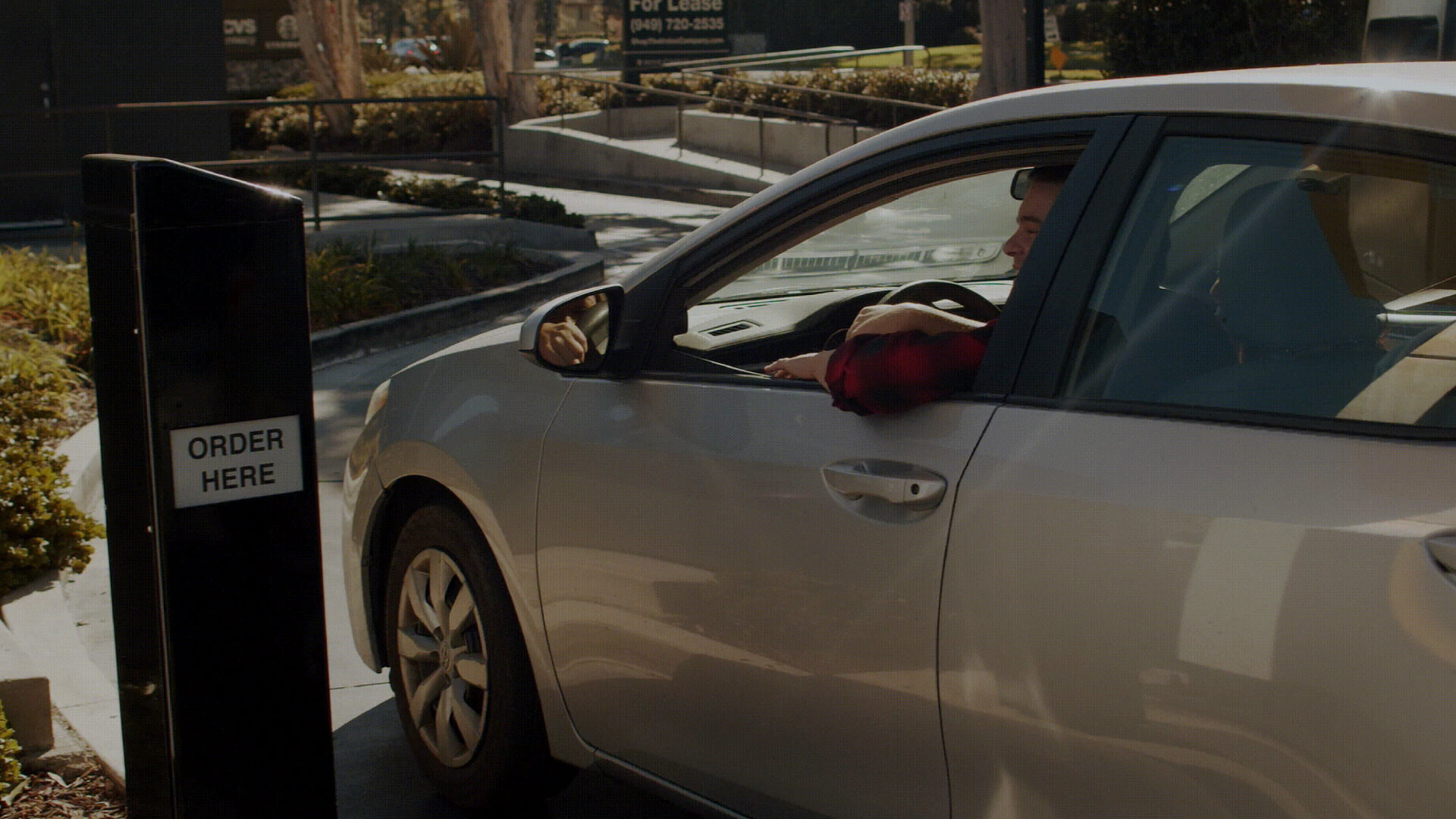
For quick-service chains with drive-thru lanes, AI voice ordering handles the full speaker interaction — from greeting through order confirmation — and routes the completed order to the kitchen display and POS. The drive-thru is the highest-volume customer interaction point for most QSR chains, and AI ordering addresses the speed, accuracy, and consistency challenges that peak-hour staffing alone can’t reliably solve.
Full-service and casual dining operators use restaurant voice ordering AI to handle reservation calls — capturing party size, date, time, dietary requirements, and special requests, then syncing directly with booking platforms. Common enquiries about hours, menus, and availability are handled without staff involvement, freeing the team for in-restaurant hospitality. VOICEplug ReserveVOICE handles this layer specifically, syncing with OpenTable and other reservation systems.
For single-location operators, voice AI is a staffing solution. For multi-unit operators, it’s a brand consistency solution — and that distinction matters operationally.
A multi-unit chain has a brand standard: how the phone should be answered, how orders should be taken, which items should be upsold, how the guest should feel at the end of the call. In practice, executing that standard depends entirely on whoever is closest to the phone during the dinner rush at each individual location. On a Monday at the flagship site with an experienced team, execution is excellent. On a Saturday at a newer location with two new hires, it’s different.
Voice AI ordering removes the human variable from phone channel consistency. Every call gets the same greeting, the same accuracy, the same upsell — regardless of which location is called, which shift is working, or how busy the floor is.
Menu updates, promotional changes, and new upsell prompts are configured once and deployed across every location simultaneously. A new menu item goes live at all 20 sites at the same moment, with zero training requirement for phone staff.
For operators who have been managing phone inconsistency across locations through training programmes, mystery shopping calls, and manager check-ins, this is the operational shift that makes the investment worthwhile.
The financial case for AI ordering in restaurants rests on two measurable outcomes: recovered missed call revenue and higher average order value from consistent upselling.
A restaurant with a $40 average order value and 20% missed call rate during peak service loses approximately $41,600 per location annually — from calls that ring out, go to voicemail, and produce no record. VOICEplug Phone AI achieves a 94.5% call answer rate across deployed locations, converting orders that would previously have been lost into completed POS tickets.
Human staff upsell when they remember, when they have time, when the floor isn’t slammed. AI voice ordering upsells every call, every time — without exception. At Rusty’s Pizza — 19 California locations — the average check size increased 12–25% after deploying VOICEplug AI Phone.
The combined impact of recovered calls and higher per-call value produces a revenue improvement that typically pays back the system cost in the first month of live operation.
Rusty’s Pizza — 19 locations, California:
Phone order conversion: 94.5% · Call abandonment: below 2% · Answer time: under 5 seconds · Check size uplift: 12–25% · Staff on phones during service: zero
Baba’s Philly Steak & Lemonade — 4 locations, Fort Wayne, Indiana:
Drive-thru interactions handled: 4,700+ · Average order completion: 94 seconds · All 4 locations live within 2 weeks of first site deployment
The voice ordering category has matured — but platforms vary significantly in their operational value for restaurants. These are the capabilities that determine real-world performance:
Non-negotiable. Orders must appear in the POS as completed orders — not on a separate tablet, not in an email queue, not in a workflow requiring manual transfer. If the system creates a new process instead of replacing one, it’s adding complexity rather than removing it. VOICEplug integrates natively with 50+ POS systems including Toast, Square, Clover, Aloha, FoodTec, InTouch, Revel, and Qu.
The system must handle real restaurant orders. “Half pepperoni half mushroom, light sauce, extra well done, garlic bread on the side, and what’s the wait time tonight?” is a standard Friday call. The restaurant voice ordering platform needs to process the full request — including the mid-sentence change — confirm it accurately, and answer the wait time question. If the system requires callers to simplify their orders, it’s not ready for restaurant operations.
For chains, the platform needs to support centralised configuration with per-location flexibility. Menu management, POS connections, promotional updates, and performance analytics should be manageable across all sites from a single dashboard. The ability to push updates to all locations simultaneously — without per-location manual steps — is the operational leverage that makes multi-unit deployment worthwhile.
Every call should generate data: volume, answer rate, conversion, peak timing, order patterns by location. For most multi-unit operators, this is the first time they’ve had any visibility into phone channel performance. The data changes how operators understand their operation — which locations have phone issues, what time their call volume peaks, and what the revenue impact of their current answer rate actually is.
A voice AI food ordering system should be live within a week of initial setup. If implementation is measured in quarters or requires a dedicated IT project, the platform wasn’t built for restaurant operator velocity. VOICEplug typically completes POS integration, menu sync, preference configuration, and goes live within 5–7 days of kickoff.
The adoption curve for voice ordering for restaurants has crossed into mainstream. Yum! Brands — parent company of Taco Bell and Pizza Hut — announced a goal of deploying AI voice bots to 500 locations across its brands in 2025. Independent regional chains, pizza operators, and casual dining groups are deploying at the same time, without the enterprise resources, because the platforms have matured to that accessibility.
The operators waiting for the technology to “prove itself” before evaluating are evaluating from behind. The proof exists — in published deployment data, in documented case studies, and in the call analytics that deployed operators now see every morning that they never had access to before.
Voice AI ordering for restaurants is not an emerging technology. It’s a deployed one. The gap between operators who’ve adopted it and those who haven’t is widening every month.
For a broader view of how restaurant voice ordering fits into the full restaurant technology landscape in 2026, our restaurant technology overview covers where the category is heading and how operators are sequencing their AI investments.
Voice AI ordering has moved from concept to infrastructure. The restaurants that treat it as core operational technology — not a feature to evaluate eventually — are building an advantage that compounds with every service.
If you want to see what it looks like for your specific POS, your menu, and your location count, book a 15-minute walkthrough of VOICEplug — we’ll show you how it works in your operation and what the results typically look like in the first week.
1. What is voice AI ordering for restaurants?
Voice AI ordering for restaurants is a conversational AI system that handles incoming calls, drive-thru interactions, or reservation requests through natural spoken conversation — taking full orders including modifications and upsells, and sending completed orders directly to the restaurant’s POS system. Unlike automated phone trees, voice AI ordering systems engage callers in real-time conversation, handle complex multi-item orders, and integrate natively with kitchen display systems and point-of-sale platforms. VOICEplug AI is a restaurant-specific voice AI ordering platform that integrates with 50+ POS systems.
2. How does restaurant voice ordering integrate with a POS system?
Restaurant voice ordering systems like VOICEplug integrate natively with the restaurant’s POS, meaning every order taken by the AI appears in the POS as a completed order — the same workflow as an in-person or digital order. No manual re-entry, no separate screen, no additional process for kitchen or front-of-house staff. VOICEplug integrates with 50+ POS systems including Toast, Square, Clover, Aloha, FoodTec, InTouch, Revel, and Qu. Menu data syncs from the POS automatically so the AI always has current items, modifiers, and pricing.
3. What results do multi-unit restaurants see from voice AI ordering?
Multi-unit restaurants deploying voice AI ordering typically see phone order conversion rates rise from 62–81% to above 94%, call abandonment rates fall below 2%, and average order values increase 12–25% from consistent AI upselling on every call. Rusty’s Pizza — 19 California locations — achieved these results after deploying VOICEplug Phone AI, with zero staff on phones during peak service and setup completed in under a week per location. Baba’s Philly Steak & Lemonade processed 4,700+ drive-thru interactions with a 94-second average order completion across four Indiana locations.
4. What is the difference between voice AI phone ordering and drive-thru AI?
Both are voice AI ordering applications but they serve different ordering channels. AI phone ordering handles inbound calls from customers placing takeout or delivery orders, making reservations, or asking menu questions — the AI answers every call and processes the order via phone. Drive-thru AI handles the speaker interaction at the drive-thru lane — greeting the guest, taking the order at the window, and routing it to the kitchen display. Both integrate with the same POS systems and use the same underlying conversational AI. Restaurants typically deploy phone AI first and add drive-thru AI as a second layer.
5. How long does it take to deploy a restaurant voice ordering system?
VOICEplug typically completes full deployment — POS integration, menu synchronisation, preference configuration, test calls, and go-live — within 5–7 days of kickoff. No new hardware is required. Multi-location deployments can add additional sites rapidly after the first location is configured: Baba’s Philly Steak & Lemonade went from one live location to four across Fort Wayne, Indiana within two weeks. The speed of implementation is a deliberate design choice for an industry where technology needs to move at operator velocity, not IT project timelines.
6. What types of restaurant calls can voice AI handle?
Voice AI ordering systems for restaurants handle: takeout and delivery orders (including full modifications and special requests), drive-thru orders from greeting to confirmation, reservation requests (party size, date, time, dietary needs), menu and hours enquiries, catering and large group calls, and after-hours calls when the restaurant is closed. VOICEplug handles all of these in natural spoken conversation, with orders going directly to the POS and reservation data syncing with booking platforms. Human staff can join or take over any call at any point if the caller’s needs require it.
7. Is voice AI ordering suitable for independent restaurants as well as multi-unit chains?
Yes. Voice AI ordering is accessible and operationally valuable for both independent single-location restaurants and multi-unit chains. For independents, the primary benefit is recovering missed call revenue during peak service and removing staff from phone duties. For chains, the additional benefits include consistent brand experience across every location, centralized management of menu and upsell prompts, and per-location call performance analytics for the first time. VOICEplug is deployed across single-location independent restaurants and chains with 19+ locations.

Jay Ruparel is a serial tech entrepreneur with a proven track record in building and scaling global technology-driven businesses. As the Co-Founder and CEO of VoicePlug Inc., he leverages his expertise in AI, machine learning, and digital transformation to drive innovation and growth. Jay is also the Co-Founder of Azure Knowledge Corporation and has received the EY Entrepreneur of the Year award. Outside of his professional endeavors, Jay mentors startups and serves as an advisor to various organizations.


VoicePlug’s conversational AI now integrated with Qu to enable intuitive voice ordering across phones and drive-thrus.Palo Alto, CA…
Learn More
If you run a restaurant on Toast and you’ve gone looking for AI phone answering, you’ve already found…
Learn More
California restaurants are automating the phone channel faster than operators in most other states, and the reason isn’t…
Learn More
Most guidance on AI reservation booking stops at the point of purchase. Pick a vendor, connect the system,…
Learn More