
4 min read

VoicePlug’s conversational AI now integrated with Qu to enable intuitive voice ordering across phones and drive-thrus.Palo Alto, CA…
Learn More
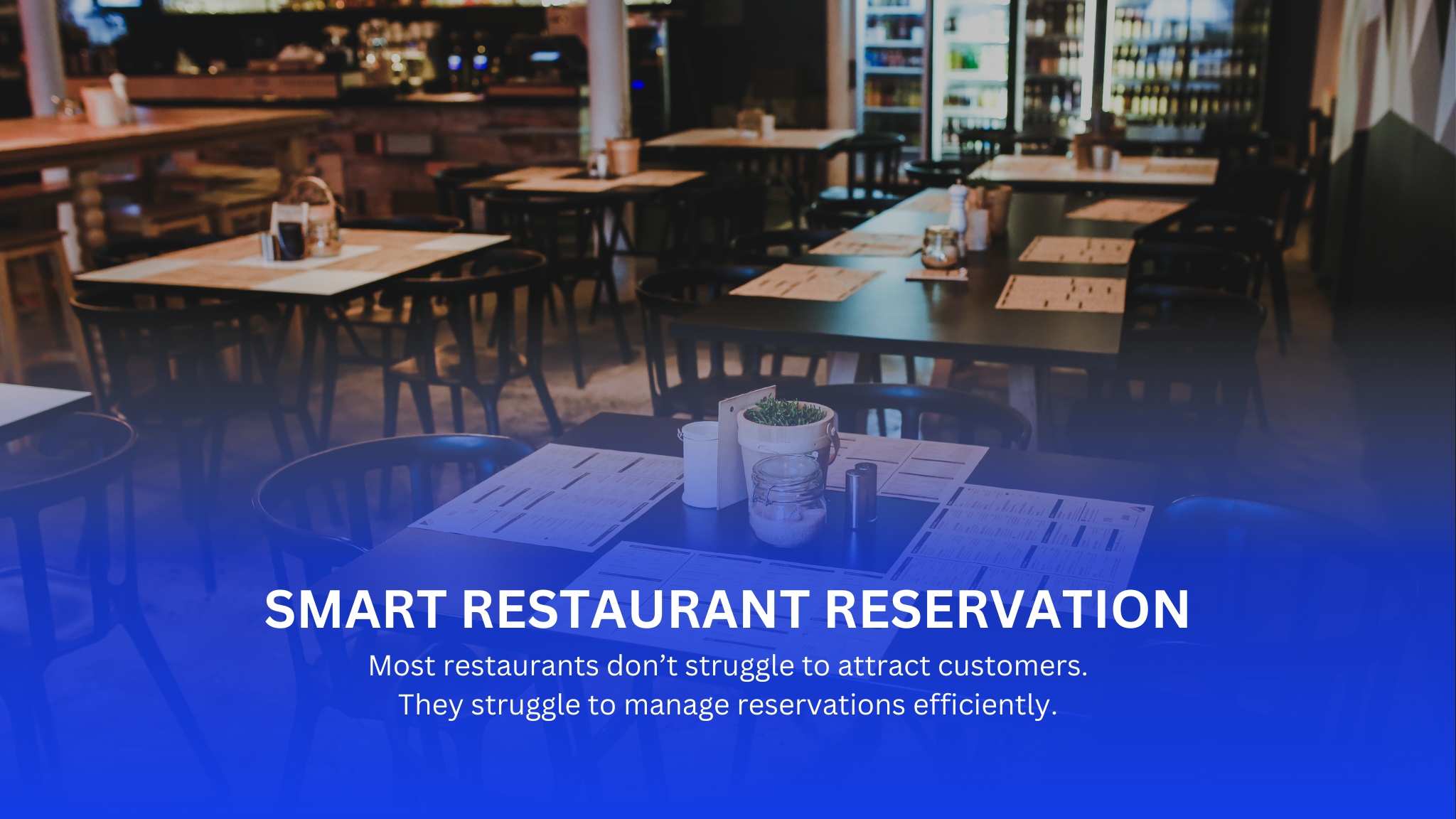
Most restaurants don’t struggle to attract customers.
They struggle to manage reservations efficiently.
During peak hours, phone calls go unanswered, reservations are logged manually, and guest information is scattered across systems. Over time, these inefficiencies lead to missed bookings, underutilized tables, and inconsistent guest experiences.
Restaurant reservation management has evolved from a front-desk responsibility into a core operational function. Restaurants that fail to modernize their reservation workflows often lose revenue—not because of low demand, but because of operational gaps.
This blog explores practical strategies for improving reservations management, reducing operational friction, and building a scalable approach to restaurant bookings.
Restaurant reservation management refers to the structured process of handling table bookings across multiple channels, including phone calls, online platforms, walk-ins, and third-party apps.
An effective system ensures that:
Yet, many restaurants still rely on manual processes that are not designed to handle modern call volumes or guest expectations.
👉 Related blog: How To Manage Reservations in a Restaurant
During lunch and dinner rush, staff prioritize in-house guests. As a result, incoming calls are often ignored or delayed.
Industry observations suggest that restaurants can miss up to 20–40% of calls during busy hours. Each missed call represents a potential lost reservation or order.
This makes phone handling one of the most critical gaps in restaurant reservation management.
Manual reservation handling increases the risk of:
These errors directly impact guest experience and operational efficiency.
Without automated confirmations or reminders, restaurants struggle to predict actual occupancy.
The result:
Many restaurants lack visibility into key metrics such as:
Without data, improving restaurant reservation management becomes reactive rather than strategic.
Effective reservations management sits at the intersection of three outcomes:
When reservation workflows are optimized, restaurants gain control over demand, staffing, and table utilization—without increasing operational complexity.
Restaurants should avoid managing reservations in disconnected systems.
A unified workflow should capture bookings from:
Centralization reduces errors and improves real-time visibility into table availability.
Phone calls remain one of the highest-intent reservation channels—especially for large groups, special requests, and time-sensitive bookings.
However, relying solely on staff to manage calls is inefficient and unscalable.
Solutions like ReserveVOICE enable restaurants to:
Instead of replacing staff, voice AI acts as an operational layer that ensures no reservation opportunity is lost.
👉 Experience ReserveVOICE for yourself
Automated SMS or voice reminders significantly reduce no-shows and improve predictability.
Restaurants can:
This creates a more stable and predictable booking pipeline.
Advanced reservation systems provide insights into:
Restaurants can use this data to:
Data-driven restaurant reservation management transforms guesswork into operational strategy.
Reservation systems should capture guest preferences such as:
Personalization improves guest satisfaction without adding manual workload for staff.
The most effective reservation strategies involve integration with:
For example, PizzaVOICE and VoicePlug Plus help restaurants connect reservation workflows with ordering and customer interaction channels, ensuring consistent data and smoother operations.
AI is redefining how restaurants handle reservations—not by replacing staff, but by augmenting operations.
Voice AI solutions like ReserveVOICE help restaurants:
Unlike traditional systems, AI assistants manage conversations end-to-end, ensuring no reservation opportunity is lost due to operational constraints.
Restaurants that modernize their restaurant reservation management often experience:
In practical terms, reservation management is not a technology upgrade—it is a revenue and efficiency strategy.
Manual reservation handling may have worked in the past, but it is increasingly incompatible with modern restaurant operations.
By combining structured processes with automation and AI-driven tools, restaurants can transform how they manage bookings, reduce operational friction, and unlock measurable growth.
Understanding how automation fits into your existing reservation workflow is the first step toward building a scalable, data-driven reservation strategy.
👉 Learn how ReserveVOICE and VoicePlug Plus help restaurants streamline reservations and phone interactions.
Restaurant reservation management is the structured process of handling table bookings across phone calls, online platforms, walk-ins, and third-party platforms. It includes capturing reservations, managing availability, reducing no-shows, and optimizing table utilization.
Effective restaurant reservation management helps restaurants improve occupancy rates, reduce operational errors, and maintain consistent guest experiences.
A reservation system is just a tool.
Reservations management is the overall strategy and workflow behind how bookings are handled.
It includes:
Restaurants that focus only on tools, not workflows, often fail to improve results.
The most common challenges include:
These issues directly impact revenue and staff productivity.
Missed calls are one of the most underestimated revenue leaks in restaurants.
During peak hours, restaurants can miss 20–40% of incoming calls. Many of these calls are high-intent guests trying to book tables.
Poor call handling leads to:
Restaurants can improve restaurant reservation management by:
Automation helps restaurants scale reservation handling without adding front-of-house workload.
Yes. AI-driven reservation workflows help restaurants:
AI does not replace staff—it reduces operational friction and improves efficiency.
Automated reminders create accountability and clarity for guests.
They help restaurants:
This leads to better staffing decisions and improved table utilization.
Key metrics include:
Tracking these metrics helps restaurants move from reactive to data-driven decision-making.
No. In fact, small and mid-sized restaurants often benefit the most.
With limited staff and high dependency on phone calls, inefficiencies in reservations management impact them more significantly than large chains.
Reservation management shapes the guest experience before they even enter the restaurant.
Efficient workflows ensure:
In modern restaurants, reservation management is not just an operational function—it’s a core part of the customer journey.

Jay Ruparel is a serial tech entrepreneur with a proven track record in building and scaling global technology-driven businesses. As the Co-Founder and CEO of VoicePlug Inc., he leverages his expertise in AI, machine learning, and digital transformation to drive innovation and growth. Jay is also the Co-Founder of Azure Knowledge Corporation and has received the EY Entrepreneur of the Year award. Outside of his professional endeavors, Jay mentors startups and serves as an advisor to various organizations.


VoicePlug’s conversational AI now integrated with Qu to enable intuitive voice ordering across phones and drive-thrus.Palo Alto, CA…
Learn More
The best restaurant POS system in 2026 is one that combines fast order management, real-time reporting, offline reliability,…
Learn More
A Restaurant Owner and Manager’s Guide to Leverage Customer Feedback Management for Growth As a restaurant owner or…
Learn More
Opening a restaurant in Texas isn’t about passion.It’s about precision. Every year, thousands of restaurants launch across the…
Learn More