4 min read

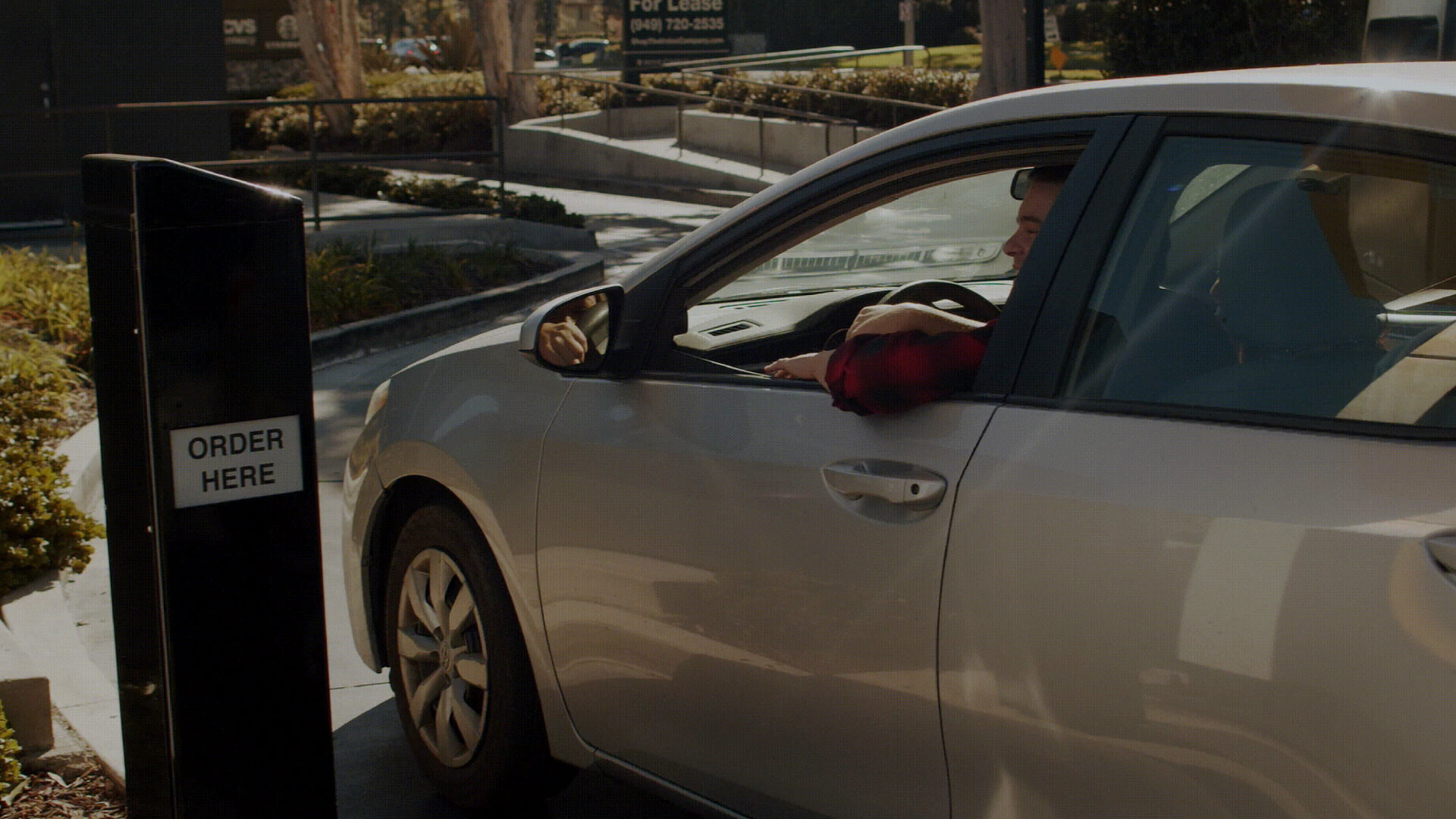
VoicePlug’s conversational AI now integrated with Qu to enable intuitive voice ordering across phones and drive-thrus.Palo Alto, CA…
Learn More
Here’s something that surprised me when I first started working in restaurant AI: most pizza operators already know they’re losing money somewhere. They just don’t always know where exactly.
The Friday dinner rush. The weekend peak. The call that rang five times while your best server was mid-order. That’s where it goes. And AI for pizza restaurants in 2026 is specifically about closing those gaps – not with some futuristic overhaul, but with tools that plug into what you already have.
I’m not going to make this a tech pitch. What follows are ten real applications of AI in pizza restaurants right now, what each one does for your operation, and where to actually start.
If you run a pizza restaurant and you’re only going to do one thing on this list, it’s this.
The phone is your highest-revenue order channel. It’s also the one that goes to voicemail the second your Friday rush hits and your team is splitting attention between the floor, the kitchen, and the register. Most pizza restaurants are operating somewhere between 62% and 81% call answer rates during peak. The rest? Gone. No record. No callback. Just a customer who decided to try somewhere else.
AI Pizza Ordering System fixes this. It answers every call immediately, takes the full order — modifications, special requests, all of it — and sends it straight to your POS. No hold times. No missed orders. In live deployments, phone order conversion climbs from that 62–81% range to 94.5%. That’s not a tweak. That’s a different operation.
You can read more about how the technology works and what to look for when evaluating it in our complete guide to AI restaurant phone answering. And if you want to see VOICEplug Phone AI specifically, that’s the most practical starting point.
Waste is the margin problem nobody likes to talk about. Pizza restaurants throw away an estimated 4–10% of food purchased every year – over-prepping, spoilage, the dough made at 10am that doesn’t get used by close on a slow Tuesday. A huge chunk of this is predictable with the right data.
AI demand forecasting pulls from your historical sales, cross-references local events and seasonal patterns, and tells you what you’ll actually need before you order. The location near the school learns to prep more dough the Friday before homecoming. The city-centre spot orders lighter on quiet January evenings. The system gets smarter the longer it runs.
The reduction in food waste from proper AI-driven forecasting can reach 30%. That’s not a sustainability talking point – that’s direct margin improvement on every order you serve. And it pairs naturally with the broader shift in how pizza restaurants are scaling with technology in 2026 – better inventory data makes everything else downstream cleaner.
Consistency is genuinely hard to scale. Your flagship location runs a tight kitchen and the pizzas are perfect. Your second location has a newer team and the portions aren’t quite as precise. Customers notice — even when they don’t say so directly — and it shows up in your repeat visit numbers.
Image recognition AI is being used to verify that toppings are correctly distributed before an order goes out — a camera-based quality check at the end of the make line. If the distribution doesn’t meet the standard, it flags before the box closes.
For multi-location pizza operators, this is about brand protection at scale. The same principle applies to portioning — AI tools that standardise how much cheese, how much sauce, how many toppings per pizza remove the human variability that quietly eats into food cost over thousands of orders.
Every time a customer orders from your pizza restaurant, they’re telling you exactly what they want next time. AI takes that signal and does something useful with it.
Personalisation engines look at what someone has ordered before and surface the most relevant add-on at the right moment. The customer who always adds garlic bread gets prompted with it before they think to ask. The vegetarian regular sees the plant-based option at the top, not buried in the menu.
The practical result is a higher average check size — not from pressuring anyone, but from making it easier to add what people already want. We’ve covered how this fits into a broader revenue picture in our guide to increasing restaurant sales if you want to see how personalisation sits alongside the other levers.
Missing item. Wrong topping. Late delivery. These happen in every restaurant, and how you handle them in the next five minutes determines whether that customer orders from you again next Friday.
AI chatbots handle this tier of support without involving a manager. They can check an order status, issue a credit, or offer a replacement — immediately, at any hour, without anyone needing to pick up the phone. For pizza restaurants running high delivery volumes, this takes a category of complaint that typically ties up a manager for 10 minutes and resolves it in under two.
It also helps with something less obvious — the staff burnout that accumulates when your team is fielding the same complaints on repeat during an already busy service. Taking that off their plate has a retention effect that doesn’t show up immediately but matters over time.
Most pizza restaurants reprice their menus once or twice a year. Ingredient costs move every week. Cheese, flour, packaging — when those go up, your margins compress silently until you get around to updating the menu. Most operators absorb this for months before acting.
Dynamic pricing AI monitors ingredient cost fluctuations and adjusts your digital menu prices within parameters you set. When mozzarella spikes, prices on your cheese-heavy items shift slightly. When it comes back down, so do the prices. You stay in control of the floor and ceiling. The AI handles the real-time movement.
This only works if you’re running digital menus — online ordering, kiosk, or app. If you’re still on printed menus for everything, that’s the conversation to have first. But if you’re already digital-first, this is margin you’re currently leaving exposed.
For pizza restaurants running their own delivery fleet, route optimisation is a direct cost line. Every extra minute on a route affects food temperature, customer satisfaction, and how many deliveries a driver can complete per shift. On a busy Friday with 80 orders going out, those minutes compound.
AI route optimisation runs continuously — taking real-time traffic data, driver locations, order volume, and address density into account and generating the most efficient routing as orders come in. Drivers cover the same territory in fewer miles. Food arrives hotter. The cost per delivery goes down.
If you’re weighing in-house delivery against third-party platforms, the technology decisions facing restaurant operators in 2026 are worth reading through. Delivery logistics is one of the sharper trade-off conversations in the industry right now.
Demand forecasting (covered above) helps with what you order. Waste analytics helps with what happens inside the restaurant after you’ve ordered it.
AI waste tracking identifies where losses are actually occurring — by category, by shift, by station. Is it the prep team over-portioning cheese? Is it dough made in the morning that doesn’t move on slow Tuesdays? Once you can see the pattern, you can act on it. Without the data, you’re guessing.
There’s also a commercial angle here that’s becoming more relevant. Sustainability matters to pizza diners aged 18–35 — the core delivery demographic. Cutting waste isn’t just a cost story. For operators who want to communicate it, it’s a brand story too.
Traditional loyalty programmes track purchase frequency. Buy ten pizzas, get one free. The customer who stops after eight gets no flag — they’ve quietly churned and you’ll never know why.
AI loyalty programmes work differently. They track behavioural patterns and identify the signals that predict churn before it happens. A customer who orders every Friday and misses two consecutive weeks gets a targeted offer on Monday of week three — the right moment, the right offer, automatically generated.
The data feeding these systems comes from every AI interaction: every phone order, every chatbot exchange, every recommendation accepted or declined. VOICEplug AI Phone Agent captures call-level data that gives you a view of your customer base that simply wasn’t available to restaurants operating at this scale before. That data is the input; retention is the output.
Here’s the honest version: you don’t need a phased AI transformation roadmap. You need to pick one thing and actually do it.
For most independent and small-chain pizza operators, that one thing is phone AI. It’s the fastest return, it integrates with your existing POS — Toast, Square, Clover, FoodTec, InTouch — and it doesn’t require an IT team or a long implementation project. You can be live in under a week. Start there, measure the actual impact on your call answer rate and order conversion, and then decide what to add.
After phone AI, look at what your POS already gives you — most modern systems include demand forecasting features that are sitting unused. Then, if you’re doing any delivery volume, look at your post-order support workflow and whether a chatbot can take that off your team’s plate.
Independent pizzerias have one real advantage over large chains on AI adoption: speed. A 300-location chain takes quarters to roll out a technology change. A 4-location pizzeria can test AI phone ordering across every site in a month, see the numbers, and make a real decision. That implementation speed is a competitive edge, and the operators moving on it now are building something that compounds.
For a practical breakdown of what to look for when evaluating voice AI, we’ve written a buyer’s guide for restaurant operators that covers what to ask, where costs actually hide, and how to run a pilot without risk.
1. How can AI help a pizza restaurant?
AI helps pizza restaurants in ten documented ways: voice ordering that answers every call automatically, demand forecasting that cuts food waste by up to 30%, food quality checks using image recognition, personalised recommendations that raise average order value, customer support chatbots for post-order issues, dynamic menu pricing tied to real ingredient costs, delivery route optimisation, food waste analytics, AI-powered loyalty that flags churn before it happens, and accessible tools for independent operators starting with phone and POS integrations.
2. What is AI phone ordering for pizza restaurants?
AI phone ordering is a system that answers every incoming call automatically, takes the full order in natural voice conversation — including modifications and upsells — and sends it directly to your POS system. It eliminates missed calls during peak service and raises phone order conversion from the typical 62–81% to above 94%. You can see how VOICEplug Phone AI works at voiceplug.ai/solutions/phoneai/.
3. Is AI worth it for small pizza restaurants?
Yes — particularly for phone AI, which is the highest-ROI AI application for any restaurant that takes phone orders. Independent pizzerias can get set up without an IT team, without new hardware, and without a long implementation project. Most POS systems are already integrated. Start there and measure the impact before adding anything else.
4. What does AI do in a restaurant?
In restaurants, AI automates the channels and decisions that are currently consuming staff time or going unmanaged. In practical terms: it answers the phone, forecasts what you’ll need to order, monitors food quality, personalises customer interactions, handles routine support queries, optimises delivery logistics, tracks waste, and powers retention programmes. Each application either reduces a cost or grows a revenue line.
5. How do I get started with AI for my pizza restaurant?
The fastest starting point is a live demo. You can book a 15-minute walkthrough at voiceplug.ai/book-ai-demo/ to see what VOICEplug Phone AI looks like for a pizza restaurant your size, with your POS system already in the picture.

Jay Ruparel is a serial tech entrepreneur with a proven track record in building and scaling global technology-driven businesses. As the Co-Founder and CEO of VoicePlug Inc., he leverages his expertise in AI, machine learning, and digital transformation to drive innovation and growth. Jay is also the Co-Founder of Azure Knowledge Corporation and has received the EY Entrepreneur of the Year award. Outside of his professional endeavors, Jay mentors startups and serves as an advisor to various organizations.


VoicePlug’s conversational AI now integrated with Qu to enable intuitive voice ordering across phones and drive-thrus.Palo Alto, CA…
Learn More
If you run a restaurant on Toast and you’ve gone looking for AI phone answering, you’ve already found…
Learn More
California restaurants are automating the phone channel faster than operators in most other states, and the reason isn’t…
Learn More
Most guidance on AI reservation booking stops at the point of purchase. Pick a vendor, connect the system,…
Learn More