4 min read

VoicePlug’s conversational AI now integrated with Qu to enable intuitive voice ordering across phones and drive-thrus.Palo Alto, CA…
Learn More
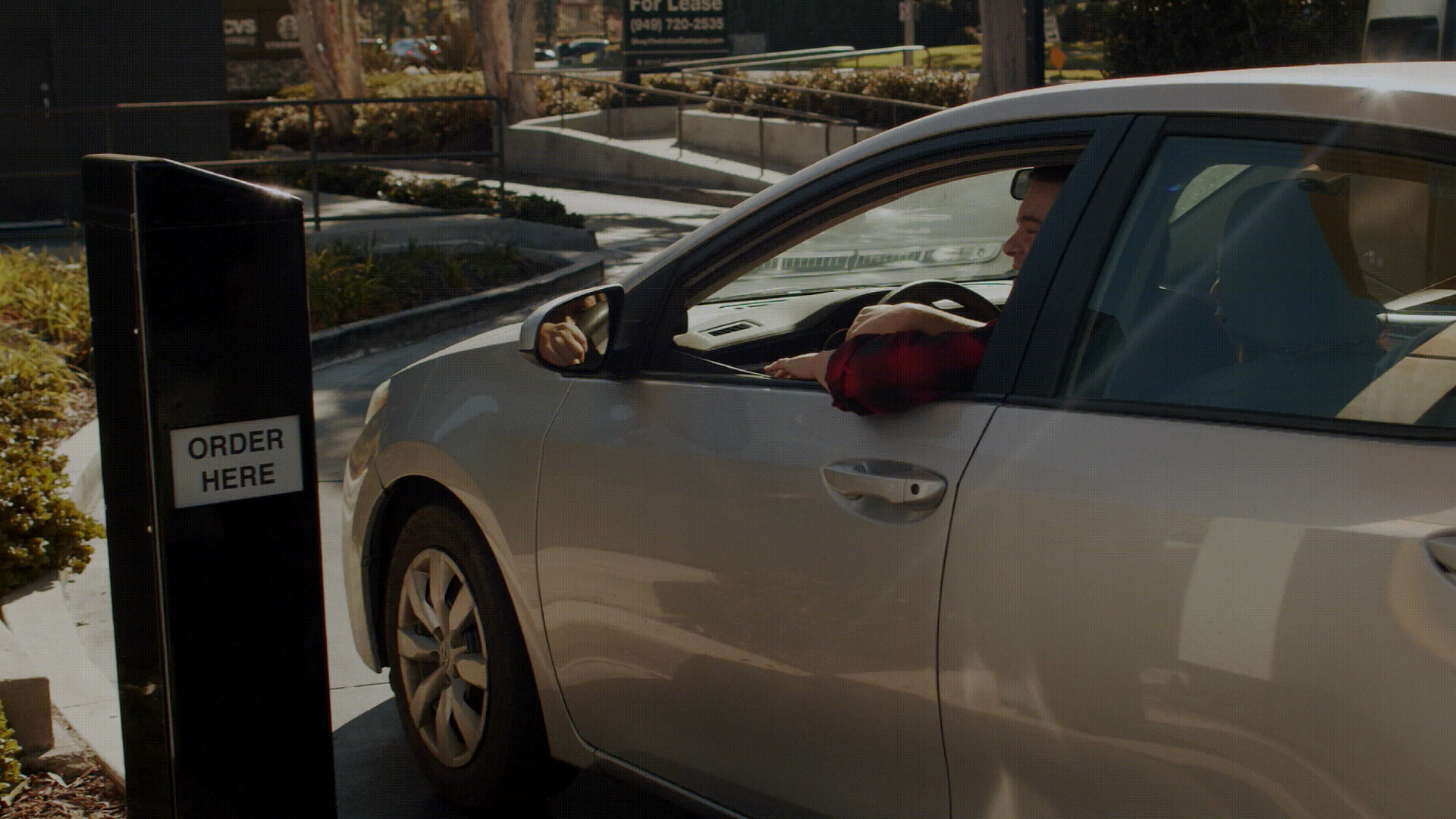
Both are “conversational AI.” Both promise to answer guest questions around the clock. Vendors often pitch them as if they were the same product.
They aren’t. A chatbot waits for guests to type on your website or app. An AI phone agent answers the phone that’s already ringing in your restaurant. For most restaurants, the difference decides whether the tool pays for itself.
This guide compares the two side by side, shows when each one wins, and helps you choose.
Choose an AI phone agent if your phone rings during service. For most restaurants, that’s where the missed revenue is: takeout orders, reservations and questions that go unanswered at peak.
Choose a chatbot if your guests mostly reach you online, and your main need is answering simple questions on your website or social pages.
Many restaurants eventually use both, but the phone agent usually pays off first. Guests who call are ready to order or book right now. 63% of Americans say calling is their preferred way to contact a restaurant, and 69% say they’re likely to give up on a restaurant if no one answers the phone.
An AI chatbot is a text assistant on your website, app, Instagram or WhatsApp. Guests type a question and the bot types back. Most chatbots answer FAQs, share links and collect details. Some can take orders, usually by sending guests through your online ordering flow.
An AI phone agent is a voice assistant that answers your restaurant’s existing phone number. It talks to guests in natural speech. It takes full orders and bookings, and sends them straight to your POS or reservation system. VOICEplug Phone AI answers in under 3 seconds and can handle any number of calls at once.
In simple terms: a chatbot waits for guests to come to it, while a phone agent catches guests who are already calling.
| AI chatbot | AI phone agent | |
| Where guests use it | Website, app, social messaging | Your existing phone number |
| How guests interact | Typing | Talking |
| What guests want at that moment | Often browsing or researching | Usually ready to order or book now |
| Takes full orders with modifiers | Sometimes; often hands off to online ordering | Yes, in conversation, straight to POS |
| Books reservations | Often via a booking link or widget | Yes, in conversation, with live sync (e.g. ReserveVOICE with OpenTable) |
| Upselling | Possible, but easy to scroll past | Natural spoken suggestion on every call |
| Solves missed calls at peak | No | Yes, the main reason to buy one |
| Works for guests who don’t use apps | No | Yes |
| Understands messy, real-world speech | Not needed (text) | Needs AI trained on restaurant calls |
| Setup effort | Usually low | Moderate: menu, POS link and test calls (about 5 days with VOICEplug) |
| Easiest ROI to measure | Chats handled, leads captured | Calls answered, orders captured, average check |
This is the deciding question. If calls stack up at lunch and dinner, a chatbot can’t help, because guests who are calling aren’t on your website. Many of those calls go unanswered. A 2026 analysis of 12,091 restaurant phone calls found about 40% of quick-service calls and roughly 25% of fast-casual calls went unanswered.
A phone agent answers every one of those calls at the same time, with no hold queue and no voicemail.
Pizzerias, wing shops, Chinese and Indian takeout, delis and family restaurants often take a large share of orders by phone. A phone agent takes the whole order in conversation. For example, it can handle “large half-and-half, extra cheese on the pepperoni side, two-liter Coke.” It reads the order back and sends a clean ticket to the kitchen.
For pizza menus specifically, PizzaVOICE handles half-and-half, build-your-own and deals. VOICEplug reports that Rusty’s Pizza reached 94.5% phone order conversion during peak service across 19 locations.
Many guests still call to book, especially for large parties and special occasions, and on holidays. A phone agent books, changes and cancels reservations in the same call. ReserveVOICE writes each booking to OpenTable in real time, so your host stand never double-books. Read more in How to Automate Restaurant Reservation Booking with AI.
Regulars, older diners and people calling from the car often won’t download an app or fill in a web form. They just want to call. A phone agent serves them in the way they already prefer.
A spoken suggestion like “Would you like garlic knots with that?” is harder to skip than a pop-up on a screen. VOICEplug reports 12–25% higher average checks from consistent upselling on calls.
To be fair, chatbots do some jobs well:
The limit: a chatbot doesn’t help with the calls you’re missing. It also rarely takes a complex order itself; most send guests to a separate online ordering page, and some guests drop off at that step.
Some products answer the phone, then text the caller a link to your online ordering page. That is a chatbot approach applied to the phone. It moves guests to another channel instead of taking their order, and guests who called because they wanted to talk often hang up.
On any demo, ask the vendor to place a live five-item order with modifiers into your POS by voice. If they can’t do it, the product doesn’t really take phone orders.
Chatbots usually cost less to run, but they earn back less in the place where restaurants lose the most money.
A simple way to compare the two:
| What to measure | Chatbot | Phone agent |
| Revenue captured | Orders that come from chat sessions | Orders and bookings from calls that would have been missed |
| Average check | Upsell clicks, if any | Spoken upsell on every call |
| Labor saved | Fewer web questions for staff to answer | Phone taken off the team’s plate during service |
| Guest experience | Faster answers online | No hold, no voicemail, instant confirmation |
Quick test: Count your missed calls at peak for one week. Multiply by the share that would have been orders and by your average phone order value. If that number is meaningful, start with a phone agent. If your phone is quiet but your website is busy, start with a chatbot.
Yes. Many restaurants use a chatbot to answer website questions and a phone agent to handle calls. If you use both, check three things:
VOICEplug focuses on voice. That means phone, drive-thru and kiosk, plus voice ordering on websites and apps. The company describes itself as offering Voice-AI solutions for phone ordering, drive-thrus, website and mobile app ordering. If you want a text chatbot as well, choose one that integrates with your POS, and keep both tools on one menu source.
| If this sounds like you… | Choose |
| “Our phone rings nonstop at lunch and dinner.” | AI phone agent |
| “We miss calls and lose takeout orders.” | AI phone agent |
| “Guests call to book tables, especially for holidays.” | AI phone agent with reservations (ReserveVOICE) |
| “We’re a pizzeria or a takeout-heavy restaurant.” | AI phone agent (PizzaVOICE or Phone AI) |
| “We have a drive-thru with long lines.” | Voice AI (Drive-Thru AI) |
| “Most guests find us online and ask simple questions.” | Chatbot |
| “We mostly need catering and event leads from our website.” | Chatbot |
| “Our phone is busy and so is our website.” | Both: phone agent first, then a chatbot |
What is the difference between an AI chatbot and an AI phone agent?
A chatbot is a text assistant on your website, app or social channels; guests type and it types back. An AI phone agent answers your restaurant’s phone number by voice, takes orders and reservations in conversation, and sends them to your POS or reservation system.
Is an AI phone agent better than a chatbot for restaurants?
For most restaurants, yes, because the biggest revenue leak is missed phone calls at peak, and a chatbot can’t answer those. A chatbot is the better fit if guests mainly reach you online with simple questions.
Can a chatbot take restaurant orders?
Some can, but most send guests to your online ordering page rather than taking the full order in the chat. An AI phone agent like VOICEplug Phone AI takes the full order by voice and sends it straight to your POS.
Can an AI phone agent take reservations?
Yes. ReserveVOICE books, changes and cancels reservations by phone, with real-time two-way OpenTable sync.
How many calls can an AI phone agent handle at once?
With VOICEplug, there’s no limit. Every caller is answered in under 3 seconds, even at peak, with no hold time or voicemail.
Which costs more, a chatbot or an AI phone agent?
Chatbots usually cost less to run. Phone agents usually earn back more, because they capture orders and bookings from calls that would otherwise be missed, and they raise the average check through spoken upselling.
Can I use a chatbot and an AI phone agent together?
Yes. Use the chatbot for website questions and the phone agent for calls. Keep both on one menu source and connected to the same POS, so guests get consistent answers.
How long does it take to set up an AI phone agent?
With VOICEplug, most restaurants go live on Phone AI in about five days. You share your menu on day 1, VOICEplug sets up the AI and POS link on days 2–3, you make test calls on days 3–4, and you go live on day 5. ReserveVOICE usually goes live in under 24 hours.
Do I need new hardware or a new phone number?
No. VOICEplug Phone AI works with your existing number and POS, with no new hardware.
Start where the revenue is
A chatbot helps guests who are browsing. An AI phone agent captures guests who are ready to order or book right now. For most restaurants, that second group is where the money is.
Book a live Phone AI demo · Talk to a VOICEplug expert
Keep reading:

Jay Ruparel is a serial tech entrepreneur with a proven track record in building and scaling global technology-driven businesses. As the Co-Founder and CEO of VoicePlug Inc., he leverages his expertise in AI, machine learning, and digital transformation to drive innovation and growth. Jay is also the Co-Founder of Azure Knowledge Corporation and has received the EY Entrepreneur of the Year award. Outside of his professional endeavors, Jay mentors startups and serves as an advisor to various organizations.


VoicePlug’s conversational AI now integrated with Qu to enable intuitive voice ordering across phones and drive-thrus.Palo Alto, CA…
Learn More
Every restaurant tech vendor now says it is “AI-powered.” Every trade show booth promises to cut labor, grow…
Learn More
An AI phone call assistant for restaurants is voice AI that answers every incoming call, takes the full…
Learn More
The Wednesday before Thanksgiving is a tough day to run a drive-thru. Highways are jammed, families are road-tripping,…
Learn More