4 min read

VoicePlug’s conversational AI now integrated with Qu to enable intuitive voice ordering across phones and drive-thrus.Palo Alto, CA…
Learn More
Every restaurant tech vendor now says it is “AI-powered.” Every trade show booth promises to cut labor, grow revenue and make guests happier. Meanwhile, some of the biggest brands in the industry have publicly pulled back AI pilots.
So what really works? This guide sorts restaurant AI into three groups: tools delivering results today, tools that are promising but need care, and claims that are mostly marketing. It ends with the questions to ask before you sign anything.
Full disclosure: VOICEplug sells voice AI for restaurants. We’ve tried to be honest about where that technology works and where it doesn’t, including the limits of our own category.
The restaurant AI that works best today does one narrow, repetitive, high-volume job, and it connects directly to the systems you already use.
Adoption is growing, but it isn’t universal yet. A National Restaurant Association report found 26% of restaurant operators currently use AI tools or technologies, with adoption slightly higher among full-service restaurants at 28% than limited-service restaurants at 24%.
| AI use case | Verdict | Why |
| AI phone answering and ordering | Working | Calls are repetitive and frequent, and phone orders go straight to the POS. Results such as calls answered and orders captured are easy to measure. |
| AI phone reservations | Working | Booking calls follow a predictable script. Real-time sync with platforms like OpenTable is available. |
| Consistent AI upselling | Working | The AI offers the add-on on every call, unlike a rushed staff member. |
| Marketing copy, reviews and admin | Working | Low risk and fast payback. This is where most operators start. |
| Drive-thru voice AI | Promising, with care | It works when built for noisy lanes and real menus. It fails when generic tools are rolled out too fast. |
| Forecasting and scheduling | Promising, with care | Only as good as your data, and it needs a manager to check the output. |
| Robot cooks and fully automated kitchens | Mostly hype for most operators | High cost, narrow tasks, and a poor fit for most menus and kitchens. |
| “AI replaces your front-of-house” | Fluff | Even the best tools need people to handle exceptions and guests in the room. |
This is the clearest win in restaurant AI right now, for a simple reason. The problem is big, measurable and repetitive.
Guests still call. 63% of Americans say calling is their preferred way to contact a restaurant, and 69% say they’re likely to give up on a restaurant if no one answers the phone. Many of those calls go unanswered. A 2026 analysis of 12,091 restaurant phone calls found about 40% of quick-service calls and roughly 25% of fast-casual calls went unanswered.
A restaurant-trained phone AI takes over that job:
VOICEplug Phone AI answers in under 3 seconds and connects with 80+ POS and restaurant systems, including Toast, Square, Clover, Olo and Revel. At Rusty’s Pizza (19 California locations), VOICEplug reports 94.5% phone order conversion during peak service.
Why it works: The job is narrow, the outcome is easy to check (did the order reach the kitchen correctly?), and the return shows up in your POS reports.
Booking calls are even more predictable than order calls. The AI needs a date, a time, a party size and any notes. Then it confirms.
The test that matters is two-way sync. Some AI tools can only read availability. If the AI can’t write the booking back to your reservation system, you will eventually double-book a table on a busy Saturday.
ReserveVOICE books, changes and cancels reservations by phone. It syncs with OpenTable in real time, so every AI booking appears in GuestCenter instantly. See How to Automate Restaurant Reservation Booking with AI for the full setup.
AI isn’t smarter than your best server, but it is more consistent. A team member under pressure takes the order and hangs up. AI suggests the garlic bread, the extra side or the current deal on every call, every shift. VOICEplug reports 12–25% higher average checks from this consistency. Measure it against your own baseline before you believe any vendor’s number, including ours.
This is where most operators start, and with good reason. Generative AI for social posts, menu descriptions, review responses and emails is cheap and low-risk. Among operators already using AI, the NRA found marketing is the most common use at 63%, followed by administrative work at 38%. If a draft is weak, you edit it. No guest is affected.
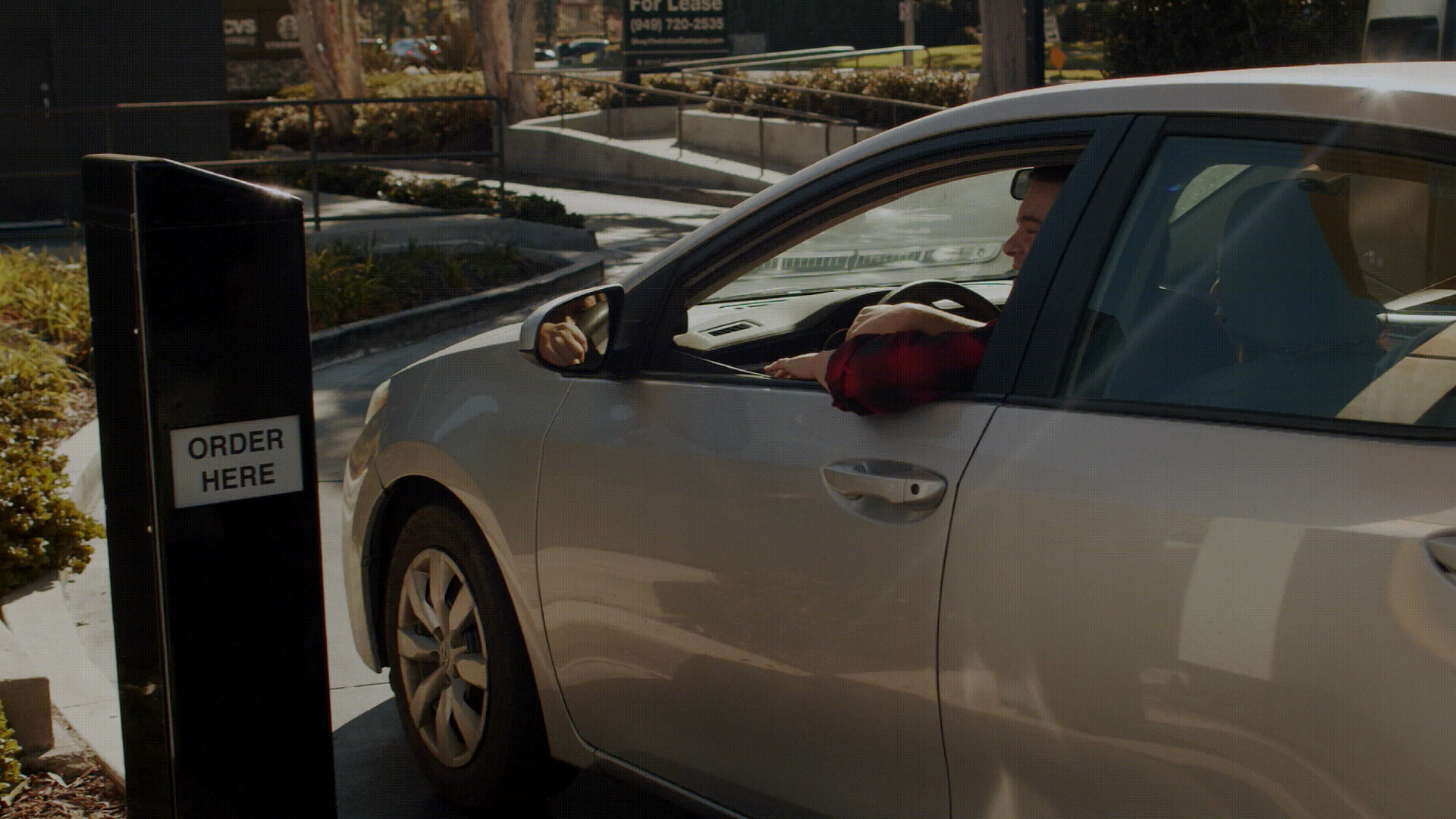
Drive-thru AI is where the industry learned its hardest public lessons.
Neither story proves drive-thru AI doesn’t work. Wendy’s plans to expand its Google-built “FreshAI” to hundreds more locations after tests in company stores. What these stories show is that drive-thru is the hardest voice environment in the restaurant: engine noise, wind, cross-talk, kids in the back seat, and pranksters filming for social media.
Done that way, it performs. At Taco’s El 24, VOICEplug Drive-Thru AI averages 87 seconds from greeting to kitchen confirmation. More here: Six reasons why your drive-thru needs AI technology.
AI that predicts covers or builds staff schedules can save real money. It is only as good as your sales history, though, and it still needs a manager who knows that the high school game moved to Friday. Treat it as a decision-support tool, not autopilot.
It doesn’t, and the best tools don’t claim to. Good restaurant AI takes the phone off your team’s plate so they can serve the guests in front of them. Taco Bell’s own lesson was to keep humans in the loop. Be wary of any vendor that pitches headcount cuts as the main return.
Ask: 99% of what? Words recognized? Orders completed without a correction? Orders that reached the kitchen exactly right? Measured at which locations, and during which hours? An accuracy number with no method behind it is a sales slogan, not data.
Some phone AI products quietly send a large share of calls to human agents in a remote call center. One phone-AI founder told reporters that about a quarter of calls are transferred to its human agents. Human backup isn’t wrong. But you should know the real share before you compare prices and claims.
Some tools answer the call, then text the guest a link to your online ordering page. That moves the guest to another channel; it doesn’t take the order. Guests who called because they wanted to talk to someone often drop off. Ask every vendor to place a live five-item order with modifiers into your POS on the demo.
Robotic fry stations and automated kitchens make great videos. For most independent and mid-sized operators, the cost, floor space and menu limits mean they aren’t a practical investment yet.
A general AI receptionist built for dentists and plumbers will struggle with “half pepperoni, half veggie, no onions on the veggie side, well done.” Restaurant menus, modifiers and combos need a model trained on restaurant conversations. VOICEplug’s models are trained on real restaurant staff and guest calls for exactly this reason. Whatever you buy, ask the vendor what its AI was trained on.
Fast setup is real for simple menus. A full menu with modifiers, combos, delivery zones and POS mapping needs proper configuration and test calls. VOICEplug Phone AI usually takes about five days from menu to go-live, and we think that is a more honest timeline than “instant.”
Ask every vendor these questions, and ask to see the answer, not just hear it.
VOICEplug focuses on the parts of restaurant AI that work: voice ordering and reservations, connected directly to your existing systems.
VOICEplug runs in 600+ restaurant locations across the US, UK, Canada, Australia and Europe. We don’t do scheduling, inventory or marketing AI. For those, pick a specialist and use our guide to planning your restaurant technology stack.
1. What AI is actually working for restaurants in 2026?
The proven uses are AI phone answering and ordering, AI phone reservations, consistent upselling, and generative AI for marketing and admin. They work because the tasks are narrow and repetitive, and the results are easy to measure.
2. Does AI drive-thru ordering work?
It can, but it’s the hardest voice setting in a restaurant. McDonald’s ended its IBM pilot and Taco Bell scaled back its rollout. Successful deployments use hardware built for noisy lanes, limits on unusual orders, a clear handoff to staff, and a gradual rollout.
3. Will AI replace restaurant staff?
No. The best restaurant AI takes repetitive tasks like answering the phone off your team’s plate, so staff can focus on guests. Even large chains have kept people in the loop.
4. How can I tell if a restaurant AI vendor is overselling?
Ask for a live demo order into your POS. Ask how accuracy is defined, what share of calls go to human agents, and for a reference customer at your size. Vague answers are a warning sign.
5. Is AI phone ordering better than online ordering?
They serve different guests. Many diners still prefer to call, so AI phone ordering captures guests who would never use a link. Tools that only text a link to online ordering lose some of those callers.
6. What’s the ROI of AI for restaurants?
ROI is clearest for phone AI. Add up the revenue from previously missed calls, the gain in average check from upselling, and the staff hours freed from the phone. Track all three against your baseline during a 30-day pilot.
7. How long does it take to set up restaurant phone AI?
With VOICEplug, most restaurants go live on Phone AI in about five days. ReserveVOICE usually goes live in under 24 hours. Be skeptical of “five-minute” claims for complex menus.
8. Which restaurant AI tool should I start with?
Start with your most expensive, most measurable problem. For most restaurants, that’s missed or rushed phone calls at peak hours.
The restaurant AI that pays off isn’t the flashiest. It’s the AI that quietly answers every call, takes every order correctly, and books every table, while your team takes care of the room.
Book a live Phone AI demo and ask us all seven questions above. Talk to a VOICEplug expert


VoicePlug’s conversational AI now integrated with Qu to enable intuitive voice ordering across phones and drive-thrus.Palo Alto, CA…
Learn More
An AI phone call assistant for restaurants is voice AI that answers every incoming call, takes the full…
Learn More
The Wednesday before Thanksgiving is a tough day to run a drive-thru. Highways are jammed, families are road-tripping,…
Learn More
Thanksgiving 2026 falls on Thursday, November 26, about two weeks from now. For many restaurants it is one…
Learn More